
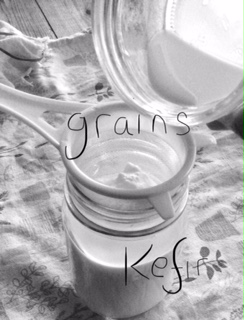
Kefir, what is it? – Bobbly or grainy cream coloured grains. Cultured with milk create a tangy/slightly sour tasting liquid. Combination of live bacteria and yeasts existing in a harmonious symbiotic relationship.
Benefits: Powerhouse of probiotics for a healthy digestive system. 3X more than yoghurt. Vitamin K for bone health. Protein source.
ITEMS ensure all clean:

ITEMS ensure all clean :
Mason jar
2nd glass jar & fitted lid Breathable jar cover
e.g coffee filter or cloth Elastic band
Plastic or wood spoon Plastic sieve/strainer
2-4 cups cow or goat milk
Origins: thought to be Western Asia/Russia. Traditionally grains were handed down generation to generation. Made in goatskin bags that were hung near a doorway, the bag knocked by passersby to keep the milk and grains well mixed.
The Magic Happens: Culture Fermenting Process 101

Glass jar add 1-2 teaspoon kefir grains.
Pour in 2-4 cups cow or goat milk.
Fabric cover over jar, secure with elastic
Place jar on kitchen counter. Not direct sun, not too hot or too cold.
Let it culture 24-48 hours, depends on season, till milk slightly thick & aroma pleasant (fresh yeasty, sour, tangy)

Use spoon as gentle help, pour liquid culture through sieve/strainer into jar.
Store in fridge with lid, up to 3 weeks
What’s next:
Enjoying what you’ve made – See post for Linzi’s Power Smoothie recipe.
Fermenting the kefir liquid for continuous supply. Repeat process. Reuse grains place into glass jar, add milk, cover, ferment, strain, consume.
2 Simplify Life & Pause Moments For You – Lifestyle management personal assistance, organizing & un-clutter your life, home, admin and To Dos. You have more time & energy for the things you enjoy with the people you love
